Pillow Fight: A Modern Script Font for Digital Branding
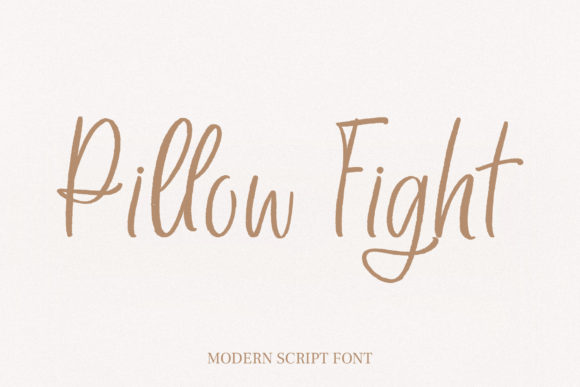
As a web designer who ships landing pages, SaaS dashboards, and conversion-optimized online stores daily, I reach for Pillow Fight when I need a Script Handwritten font that feels human—but never sloppy. Pillow Fight is a modern script font with confident letterforms, subtle bounce, and just enough irregularity to read as hand-drawn without sacrificing digital legibility. It’s not a calligraphic flourish or a chaotic brush script—it’s clean, intentional, and built for screen-first contexts where tone matters as much as clarity.
Pillow Fight for Hero Headlines and Landing Page Titles
When your hero section has 3 seconds to communicate warmth, creativity, and brand personality, Pillow Fight delivers instantly. Unlike many Script Handwritten fonts that vanish on mobile or blur at small sizes, Pillow Fight holds its shape even at 48px on retina displays—especially when used over high-contrast backgrounds or soft image overlays. I use it exclusively for primary headlines (H1), not body text—and always pair it with a neutral sans serif like Inter or Manrope for paragraphs and CTAs. That contrast builds visual hierarchy while keeping scanning behavior natural: eyes land on the Pillow Fight headline first, then flow downward into scannable supporting copy.
Pillow Fight for Boutique Online Store Banners and Product Packaging Mockups
If you’re designing an online store for handmade ceramics, organic skincare, or slow-fashion apparel, Pillow Fight helps signal craft, care, and authenticity before a single product image loads. In Shopify banners, Klaviyo email headers, or Figma mockups for packaging design, Pillow Fight adds tactile charm without undermining professionalism. It works best on short phrases—“Hand-Poured Soy Candles”, “Small-Batch Botanicals”, “Made With Love Since 2021”—not long descriptions. For responsive layouts, I serve Pillow Fight as a webfont via WOFF2 and set fallbacks so headings gracefully degrade to system fonts on slower connections. Bonus: because it’s a premium Fonts release, it includes OpenType alternates—ideal for avoiding repeated letter combinations in logo lockups or branded social media graphics.
Pillow Fight for Creative Portfolio Websites and Designer Brand Kits
Creative professionals—illustrators, lettering artists, UI designers—need type that reflects their voice *and* supports usability. Pillow Fight strikes that balance: expressive enough for a personal brand kit, disciplined enough to hold up across dark/light mode toggles and multi-device previews. I embed Pillow Fight as the sole display font in portfolio headers, project titles, and testimonial accents—never for navigation labels or form fields. On portfolio sites built in Webflow or Framer, I apply subtle letter-spacing (+20–40) and line-height adjustments to prevent crowding at larger sizes. And yes—it pairs beautifully with serif body fonts like Crimson Pro for editorial-leaning portfolios, or geometric sans serifs like Poppins for tech-adjacent creative work.
Pillow Fight for Email Headers, Social Media Graphics, and Digital Ads
In crowded inboxes and fast-scrolling feeds, Pillow Fight creates instant recognition. Its rhythm reads as friendly but focused—perfect for newsletter subject lines rendered as image headers, Instagram Story text overlays, or LinkedIn banner slogans. Because it’s a Script Handwritten font designed for digital use—not scanned handwriting—it avoids the jagged edges or inconsistent spacing that break readability on small screens. I recommend using Pillow Fight only for headlines under 12 words, always against solid or lightly textured backgrounds (no busy photos). For accessibility, I ensure contrast meets WCAG AA standards—especially important for email clients that don’t support custom font loading.
Pillow Fight for Branded Course Sales Pages and Coaching Website CTAs
When selling digital courses, workshops, or 1:1 coaching, trust hinges on perceived authenticity—and Pillow Fight conveys sincerity without sounding gimmicky. On course sales pages, I use it for benefit-driven subheaders (“You’ll Learn How to Launch With Confidence”) and button labels (“Start My Journey” or “Grab Your Spot”). Not for pricing tables or feature lists—those stay in a crisp sans serif—but for emotional hooks that align with the instructor’s voice. As a commercial Fonts license, Pillow Fight permits usage across client websites, SaaS dashboards, downloadable PDF workbooks, and even embedded video thumbnails—making it a true workhorse for digital educators building scalable brand assets.
Pillow Fight for T-Shirt Design Mockups and Sticker Templates in Figma
Even if you’re not printing physical merch, Pillow Fight shines in digital mockup workflows. When designing t-shirt design templates or sticker packs for creative marketplaces, Pillow Fight gives vector-based mockups immediate character—without requiring manual kerning tweaks or layer adjustments. Its consistent x-height and balanced ascenders/descenders mean text stays legible at thumbnail size in marketplace previews. I export all Pillow Fight-based assets as SVG with embedded fonts, then test rendering across Chrome, Safari, and Edge. The result? Consistent, brand-aligned visuals—whether someone’s browsing your Gumroad store or previewing your Canva template pack.
What to Know Before You License Pillow Fight
Pillow Fight is licensed for commercial use—including client projects, online stores, landing pages, digital templates, and brand identity systems. It ships in OTF, WOFF2, and TTF formats, with full Latin character support and basic OpenType features (ligatures, stylistic alternates). No variable weight axis—but its single, purpose-built weight performs exceptionally well as a display font across devices. Just remember: Pillow Fight is a Script Handwritten font, not a text face. Use it to highlight, evoke, and differentiate—not to explain, instruct, or list. Pair it thoughtfully, deploy it intentionally, and let it do what it does best: make digital spaces feel human.