Rotisseria: A Natural Dry Brushed Script Font for Digital Branding
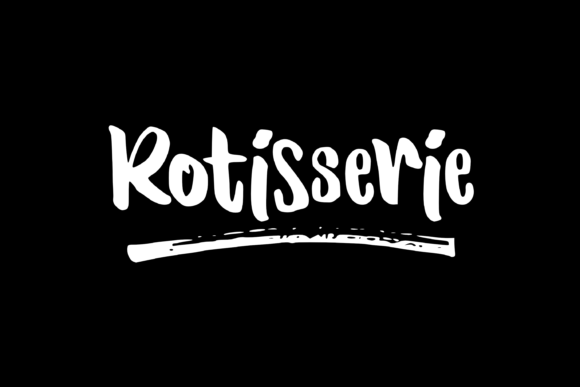
Rotisseria is a natural dry brushed script font that brings raw, tactile energy to digital interfaces — ideal for web designers and UI creators who need a Script Handwritten typeface with expressive texture and intentional imperfection. Unlike overly polished scripts, Rotisseria’s rough, hand-drawn character adds warmth and authenticity without sacrificing legibility at scale. As a Fonts asset built for modern web use, it’s PUA encoded — meaning glyphs load reliably across platforms, supporting consistent rendering in Figma, Webflow, WordPress, Shopify themes, and custom CSS @font-face implementations.
Rotisseria for Hero Section Headlines and Landing Page Titles
Rotisseria shines brightest where first impressions matter: hero sections on SaaS landing pages, course sales pages, and boutique e-commerce sites. Its dry brush texture creates immediate visual hierarchy — guiding the eye before the user reads a word. Use Rotisseria at 48–72px for H1s over high-contrast backgrounds (e.g., charcoal text on cream or off-white gradients), and always pair it with a neutral sans serif like Inter or Manrope for body copy. Avoid stacking Rotisseria in multi-line paragraphs; instead, reserve it for single-line titles, subhead accents, or short value propositions (“Handcrafted. Human-Centered. Yours.”). On mobile, test at ≥36px to maintain rhythm and avoid visual crowding.
Rotisseria for Logo Design and Brand Identity Systems
Rotisseria is a Script Handwritten font engineered for logo design that communicates artisanal credibility — especially for creative studios, ceramic brands, indie publishers, and wellness practitioners. Its uneven baseline and subtle ink bleed suggest craftsmanship, not automation. When used as a primary logo font, Rotisseria works best alongside a clean geometric sans (like Montserrat or Poppins) for secondary text, URLs, and navigation labels — reinforcing contrast without visual competition. Because it’s PUA encoded, you’ll get full access to ligatures and stylistic alternates in design tools, letting you fine-tune spacing and flow for lockups. For web deployment, convert Rotisseria to WOFF2 and serve via self-hosting or a trusted font CDN to ensure fast, license-compliant loading.
Rotisseria for Greeting Cards and Digital Holiday Campaigns
Rotisseria is a Fonts choice that elevates seasonal email headers, limited-time offer banners, and digital greeting cards — particularly for lifestyle brands, wedding planners, and handmade goods stores. Its natural dry brushed script font personality evokes handwritten sincerity, increasing perceived trust and emotional resonance during high-intent moments (e.g., “Merry & Made With Love” on a Shopify banner). Use Rotisseria sparingly: one phrase per banner, never more than five words. Apply subtle letter-spacing (0.5–1.0em) and set against soft shadows or muted photo overlays to preserve readability. Avoid pure black on white — try deep slate (#2D3748) on warm ivory (#F9F7F3) for better screen comfort and brand cohesion.
Rotisseria for Quotes and Social Media Graphics
Rotisseria is a Script Handwritten font uniquely suited to quote-based content — whether embedded in blog post headers, Instagram carousels, or Pinterest pins. Its rough texture adds gravitas to short, powerful statements (“Begin anyway.” or “Slow down. Breathe. Create.”), helping them stand out in crowded feeds. For accessibility and scannability, always place Rotisseria quotes over solid-color or desaturated image backgrounds — never busy patterns. Export graphics at 2x resolution for Retina displays, and keep text height no smaller than 24px in final assets. Pair with a light-weight sans serif caption (e.g., Lato Light, 14px) for attribution — maintaining hierarchy while honoring licensing terms for commercial Fonts use.
Rotisseria for Product Packaging Mockups and Online Store Banners
When designing Shopify banners, product mockups, or digital packaging previews, Rotisseria serves as a Fonts anchor that signals authenticity and small-batch quality. It performs exceptionally well in “hero + CTA” layouts: a Rotisseria headline (“Small Batch • Big Flavor”) above a bold sans-serif button (“Shop Now”). Because it’s a natural dry brushed script font, it avoids the sterility of AI-generated alternatives — making it ideal for food brands, apothecaries, and craft distilleries building digital shelf presence. For responsive banners, define fallbacks in CSS (e.g., font-family: 'Rotisseria', cursive;) and test rendering across Chrome, Safari, and Firefox to ensure PUA-encoded glyphs remain intact.
Rotisseria for Editorial Blog Headers and Creative Portfolio Sites
Rotisseria is a Script Handwritten font that adds narrative texture to editorial blog headers and personal portfolio sites — especially for writers, illustrators, and UX researchers positioning themselves as thoughtful, human-centered creators. Use it for article titles, section dividers (“Reflections”, “Process Notes”), or project nameplates — never for body copy or navigation menus. In Figma or Webflow, adjust tracking manually (+20–40) to prevent tight collisions between strokes. For dark-mode compatibility, test Rotisseria against #1A1A1A backgrounds using semi-bold weights (if available); if only regular weight is included, add a 1px soft white stroke in SVG exports for clarity. Remember: Rotisseria is a premium Fonts asset — verify commercial licensing covers client work, template resale, and SaaS dashboard integration before deployment.
Rotisseria for Greeting Card Templates and Digital Download Kits
Rotisseria is a Fonts staple for designers selling Canva templates, Notion brand kits, or printable greeting card bundles. Its PUA encoding ensures seamless glyph access in drag-and-drop editors, and its natural dry brushed script font aesthetic appeals directly to Etsy sellers and creative entrepreneurs seeking differentiated, non-generic assets. Include usage notes in your template documentation: recommend pairing Rotisseria with Open Sans for editable body fields, limiting its use to title layers only, and specifying minimum size thresholds (20px for print, 28px for web previews). Because Rotisseria supports multilingual characters via PUA mapping, it’s viable for bilingual greeting sets — just confirm glyph coverage for accented characters before finalizing.